
Why we invested in Doctorsa: the marketplace reshaping remote urgent care.
Waking up in the middle of the night to discover your leg is swollen and inflamed from an unidentified insect bite is never much fun. But if you’re staying in a shared casa particular in a quiet suburb of Havana, Cuba, and you’d spent the day before hiking along the Almendares river, things can take a rather more dramatic turn.
You interrogate every LLM you’re subscribed to, hoping for some reassurance to stave off a panic attack, and perhaps a bit of medical guidance too: how serious is this, what should you take, and is a trip to a proper medical facility in order — assuming you can even find one. Now imagine, instead of wading through travel insurance paperwork to work out whether your compulsory policy actually covers you, and instead of spending an hour on hold praying a human picks up rather than a poorly-trained AI agent, you could simply speak to a local doctor. Someone you can actually communicate with, available round the clock, who answers within five minutes and tells you exactly how to handle the emergency.
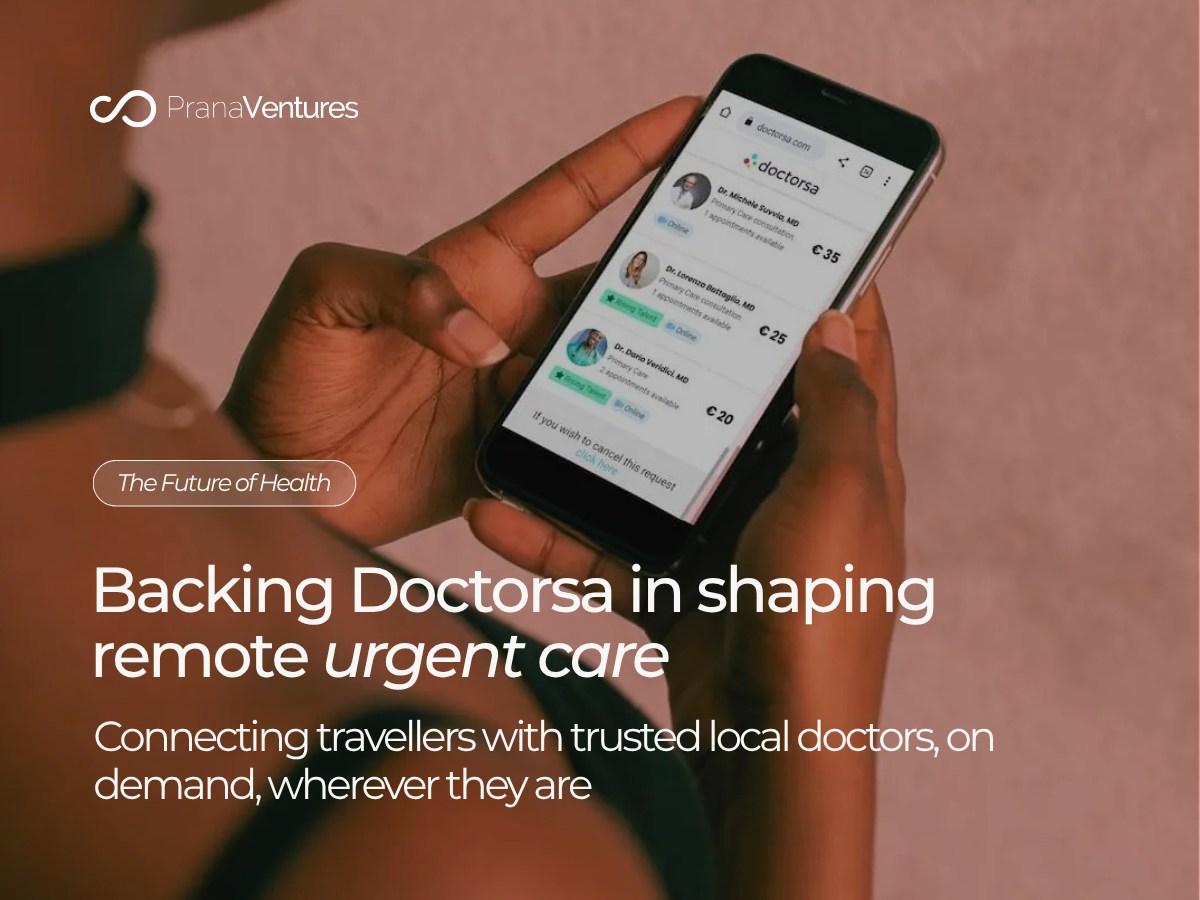
That gaping hole in the market is exactly what led Nadia and Francesco to found Doctorsa: a B2C urgent-care marketplace connecting travellers with doctors. What began as a service for foreign tourists needing medical help in Italy has since expanded to more than 40 countries worldwide, and it’s still spreading fast.
The reason is simple: almost three in ten travellers deal with some kind of health issue on the road, and are only too happy to pay €40 for an immediate urgent consultation, even remotely. Meanwhile, sharp-eyed doctors are queuing up for these appointments, which carry excellent margins given how short they are, how little travel they involve, and how straightforward the cases tend to be. Little wonder, then, that top-performing doctors have become almost obsessive about getting booked, racking up well over a thousand five-star reviews and earning as much as they would from their main job.
Individual travellers, though, are just the tip of the iceberg. While plenty of people prefer organising their own trips, tour operators, travel agencies and insurance giants are all jostling to fend off shrinking margins and sluggish lead conversion. For these players, the key to standing out is overcoming digital sterility by offering a compelling mix of quality and breadth of service — and Doctorsa fits the bill perfectly for a move into B2B. It’s high-value for the end customer, complementary to existing insurance cover, and free for the distributing partner: genuinely win-win-win.
The way people access healthcare is changing fast, and so is the role of the doctor — no longer a slave to prescriptions or a compulsive reader of scans and medical records, but a high-value orchestrator of data and information, with omnichannel access to the patient. In the Future of Health we envisage, the doctor-patient relationship won’t be replaced by some man-machine hybrid; instead, it will become accessible to everyone, with no geographical limits, immediate and specialised.
Doctorsa has chosen to be part of that future while keeping the human relationship front and centre — letting one unlucky tourist in Cuba get on with their holiday, sparing them hours of waiting in a Havana A&E.